

The #1 Recovery Drug
I'm a big fan of easy to track "metrics" for your health like sleep, nutrition, resting heart rate, steps, etc.
Because, after all, what doesn't get measured doesn't get managed.
Fortunately, products exist now that do most of that tracking without any effort.
I use a Whoop, which you can wear just about anywhere on your body, but Oura makes a ring and Fitbit and Apple both make a watches.
It's one thing to be able to see these metrics objectively and another thing to interpret them for what they mean.
For example, just last week I had two less than average nights of sleep.
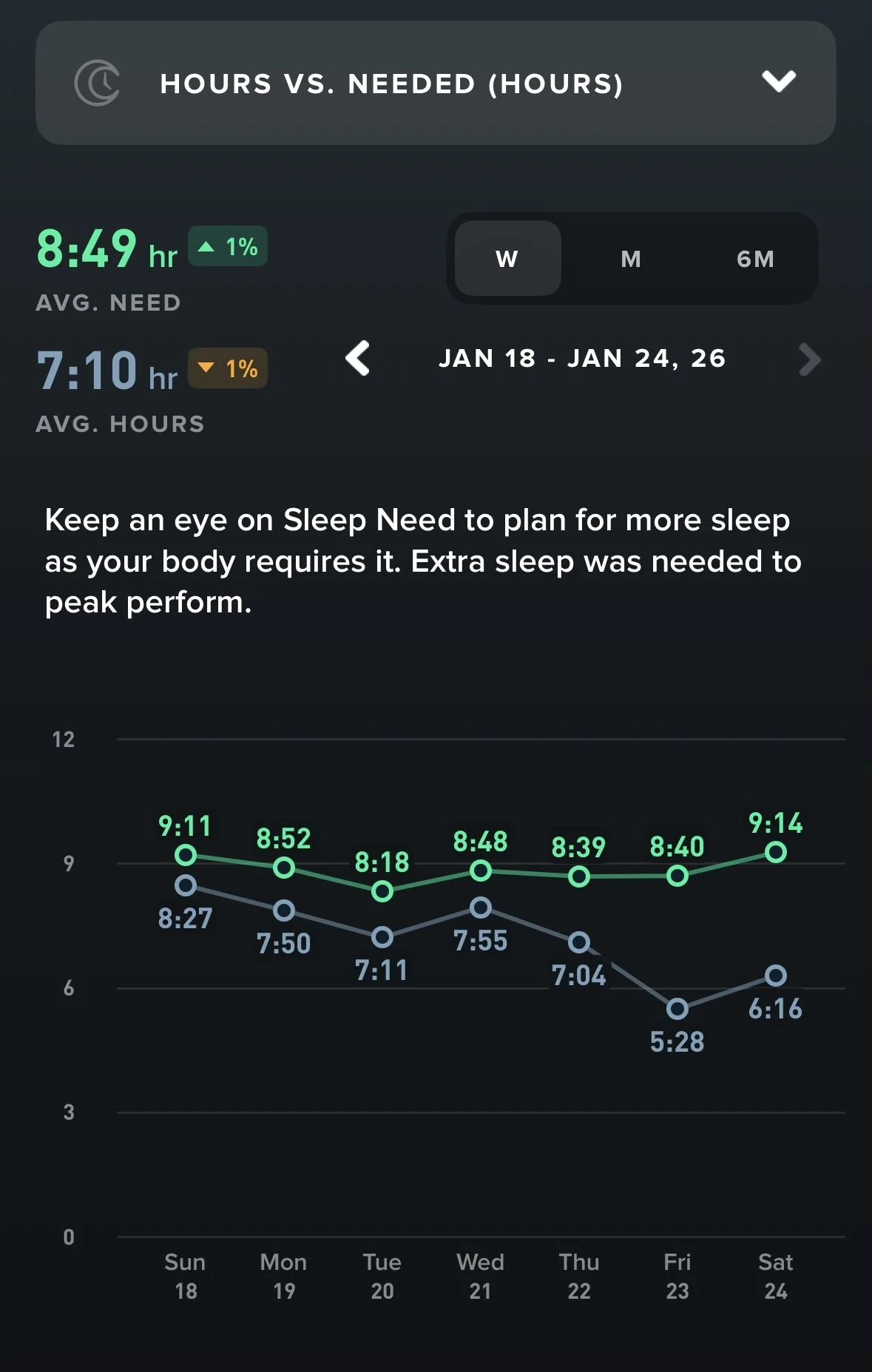
You can see my sleep duration trending downward those two nights (the 23rd and 24th) below...
Now, I already knew that I got less sleep those two nights soley based off of the time I went to bed and the time I woke up.
BUT, what I'm not able to know without checking my Whoop is how this reduced sleep effected other metrics.
Below, you can see how my heart rate variablility and resting heart rate responded both of those nights.
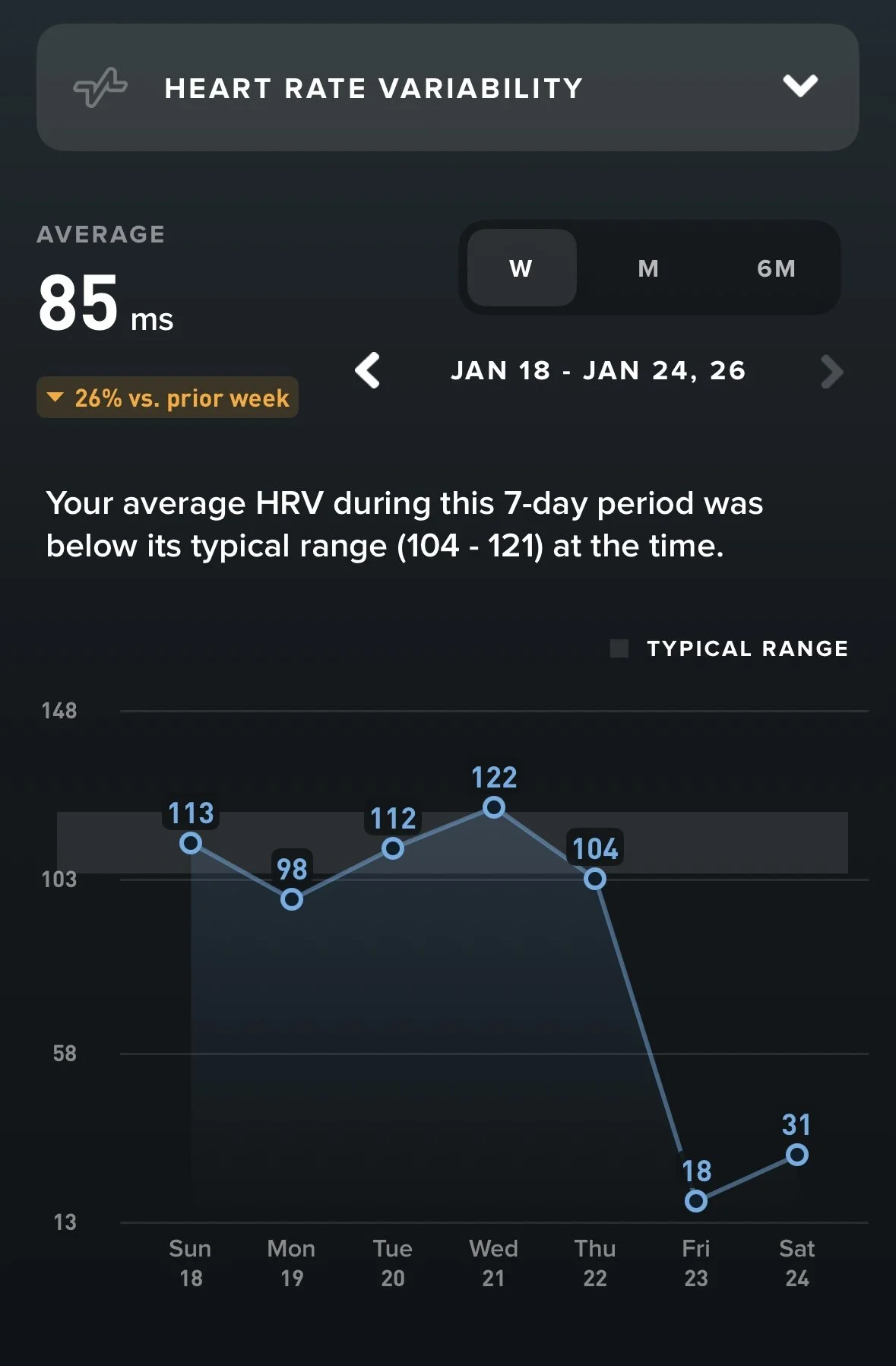
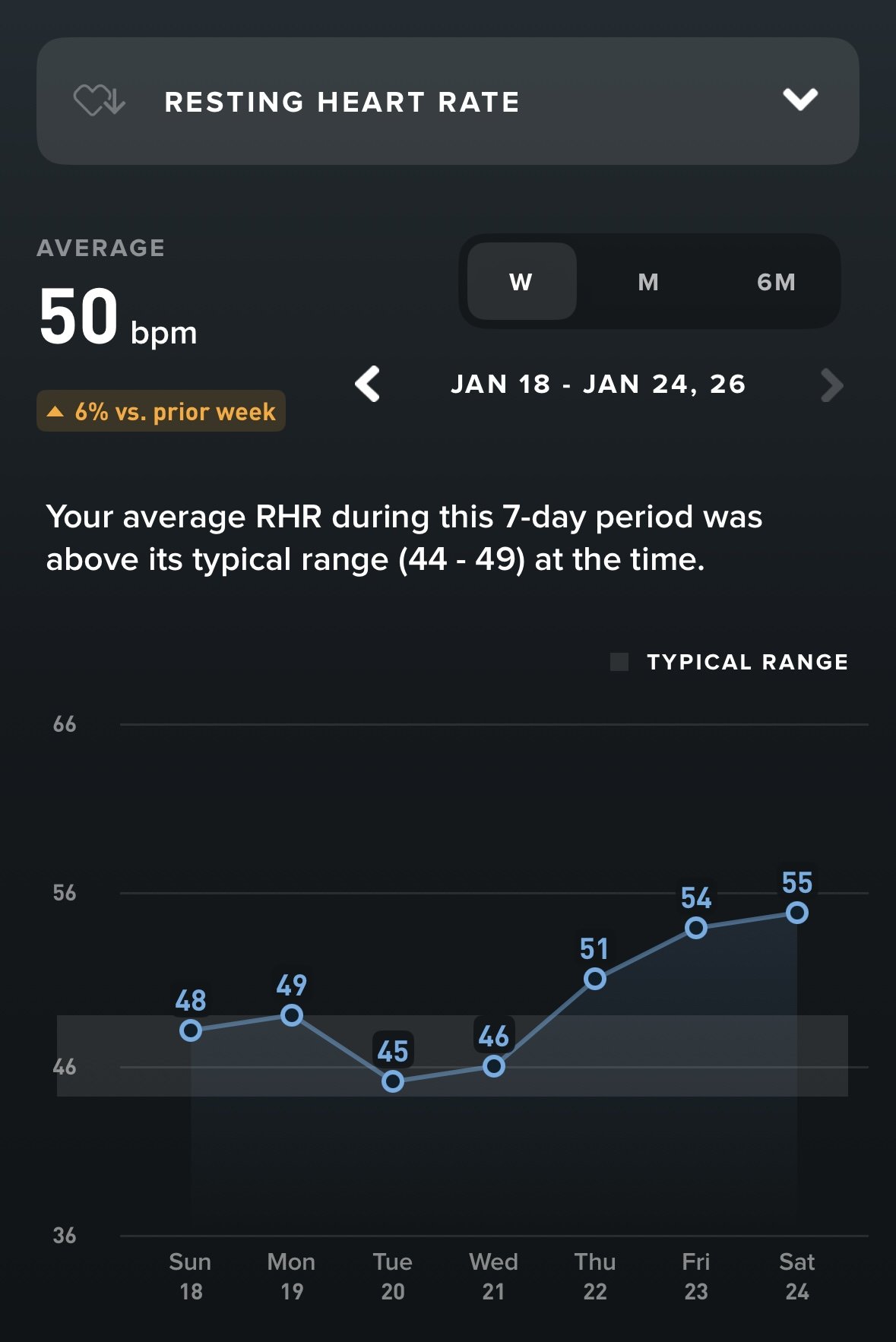
As you can see, my heart rate variability significantly decreased while my resting heart rate increased.
To know what this means, we have to understand what heart rate variability and resting heart rate are.
Resting heart rate is the easiest to explain. As it suggests, it's your heart rate when you're at rest.
A lower resting heart rate just means that my heart/ body doesn't have to work as hard to provide organs and muscles with the blood/ nutrients they need.
Heart rate variability is the variability in time between heart beats. We're talking milliseconds here.
A higher heart rate variability suggests that the body is more "balanced" with fluctuating between the restful part of the nervous system (parasympathetic) and the fight or flight part of the nervous system (sympathetic).
These two metrics are often used to describe how "recovered" you are. Where the higher your heart rate variability and the lower your resting heart rate the more recovered you are.
So what am I getting at here?
Sleep is the best form of recovery we have.
If this "decreased recovery" can happen to me in only two nights of poor sleep, what do you think a week of poor sleep does to you?
How about a month?
Or years?
And, these are just two metrics that are negatively impacted by poor sleep.
Cortisol levels can increase, testosterone levels decrease, blood pressure increases, growth hormone decreases, insulin sensitivity decreases...it goes on and on!
When you can objectively see the effects poor sleep as on your recovery, it becomes more obvious how it can contribute to injuries.
A strong argument can be made that if you:
sleep 7-9 hours a night.
eat real food to fuel your body.
strength train to make your body more resilient to physical stress.
manage psychological stressors.
then your chances of getting injured are significantly lowered.
You don't need to keep buying all of these "recovery" gadgets to optimize your recovery and fitness routine, just become a pro at those 4 things.
If you want to learn more about what sleep is and why it's so important, I highly recommend checking out the book Why We Sleep.
After reading this book, you'll feel guilty every time you get less than 7 hours of sleep...
And if you want to learn more about how you can get out of pain and get back to training at your full potential, click here to book your totally free phone consult!
We've helped hundreds of athletes overcome pain and build better training habits and I'm confident we can do the same for you!