

Physical Therapy in Middletown, DE: A Complete Guide to Recovery and Performance
If you are an athlete, you already know the frustration. You push hard in training, compete with everything you have, and then an injury or nagging pain forces you to slow down. Traditional physical therapy tells you to rest, hands you a generic sheet of exercises, and sees you for 15 minutes between four other patients. That is not recovery.
Top Tier Physical Therapy in Middletown, DE was built for athletes who refuse to settle. Whether you are a CrossFitter chasing a new total, a runner working toward your next PR, or a combat sports athlete preparing for competition, this guide breaks down exactly how performance-focused physical therapy can get you back to doing what you love, faster and stronger than before.
Why Traditional Physical Therapy Falls Short for Athletes
Most physical therapy clinics operate on a volume-based model. More patients per hour means more revenue. The result? You end up on a table with a heating pad, a set of band exercises you already know, and a provider who barely remembers your name by your third visit.
For the everyday patient managing mild discomfort, that model might be enough. But for athletes with specific performance goals, it is a dead end.
The Assembly-Line Approach Does Not Work
When care is split across multiple providers and rushed into short windows, critical details get lost. Your program does not progress. Your goals are not tracked. And you end up spending months in physical therapy without actually getting back to your sport.
Athletes need more than pain relief. They need their mechanics assessed, their weaknesses addressed, and a plan that bridges recovery directly into performance. That requires time, consistency, and a provider who understands your athletic demands.
What Performance Physical Therapy Looks Like Instead
Performance physical therapy flips the traditional model on its head. Instead of treating your symptom in isolation, it looks at how you move, why the injury happened, and how to prevent it from coming back. Treatment is built around your specific athletic demands, not a one-size-fits-all protocol.
At Top Tier Physical Therapy, every appointment is 60 minutes of one-on-one time with the same provider at every single visit. No rotating staff. No being handed off to an aide. Just focused, individualized care built around your goals.
The Top Tier 3-Step Process: Feel Better, Move Better, Perform Better
Recovery is not linear, and it is not a single destination. At Top Tier Physical Therapy, the approach is structured around a clear three-step framework designed to take you from pain to peak performance.
Step 1: Feel Better
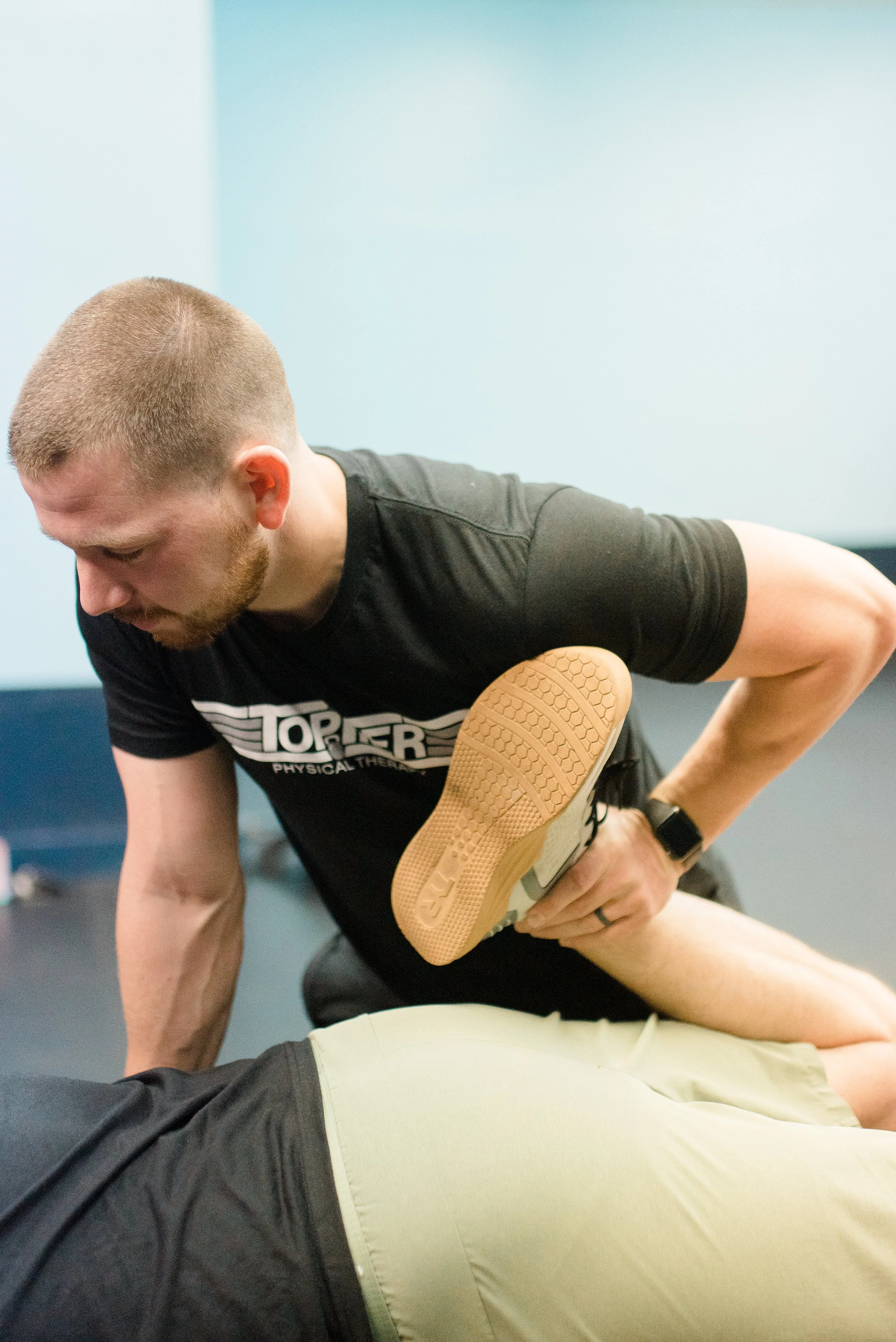
The first priority is reducing pain and restoring your ability to train and move without limitation. This phase uses evidence-based treatments including manual therapy, dry needling, joint mobilization and manipulation, and soft tissue mobilization to calm irritated tissue, improve joint mobility, and get you moving comfortably again.
This is not about masking pain. It is about addressing the root cause so that the work you put in during the next phases actually sticks.
Step 2: Move Better
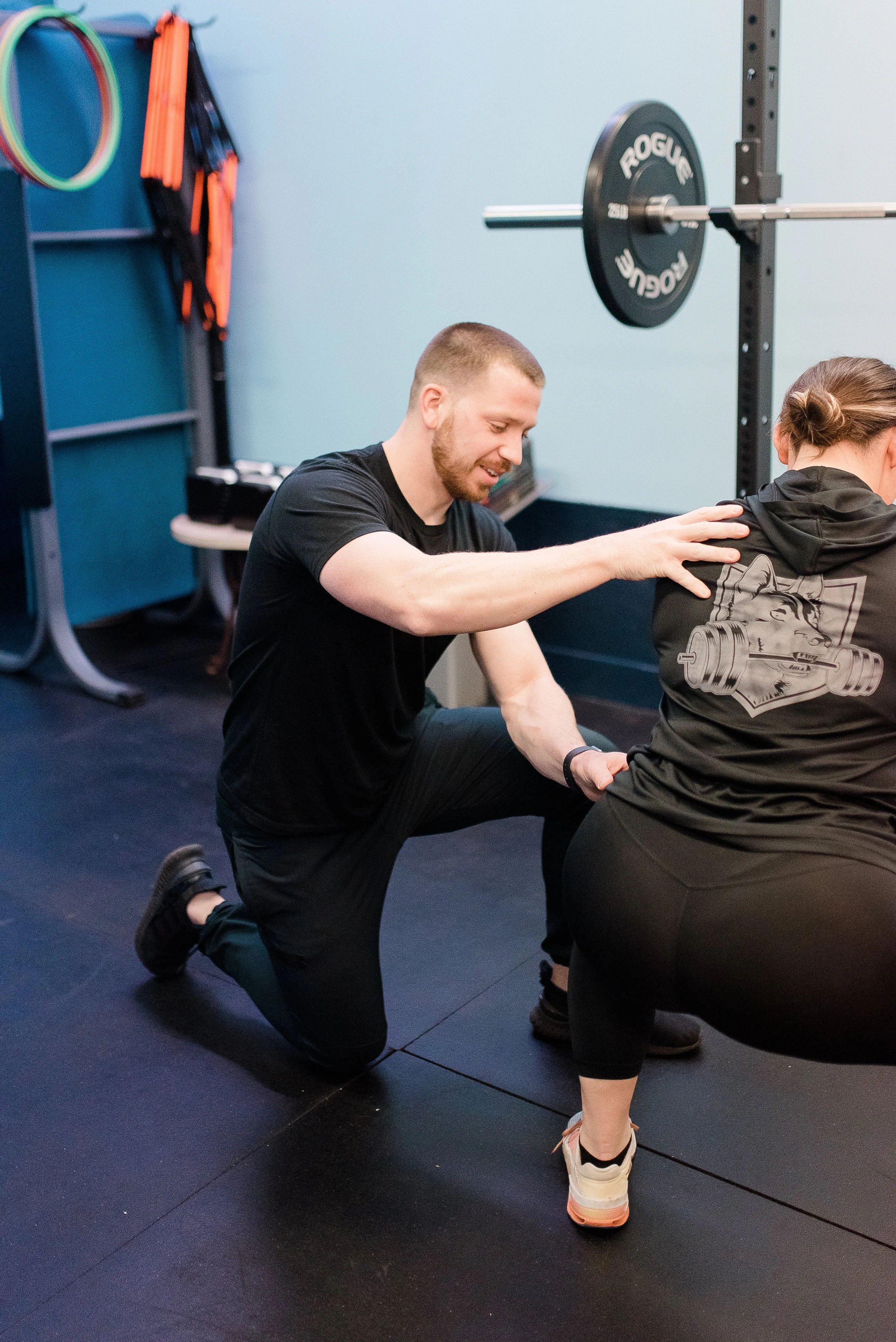
Once pain is under control, the focus shifts to movement quality. A thorough movement screen identifies compensation patterns, asymmetries, and mechanical inefficiencies that either caused your injury or are increasing your risk of future problems.
Neuromuscular re-education, mobility work, and targeted therapeutic exercise are used to retrain how your body moves under load. For athletes, this phase is critical because it rebuilds the foundation your performance sits on. Skipping it is exactly why so many athletes get reinjured after returning to sport.
Step 3: Perform Better
This is where things get exciting. Once you feel good and move well, the program shifts into performance training territory. Plyometrics, return-to-sport progressions, and strength and conditioning work are integrated to rebuild sport-specific power, speed, and resilience.
Objective testing using tools like VALD force plate testing, isokinetic and dynamometer testing, and return-to-sport testing ensures that progress is measured, not guessed. When the data says you are ready, you return to your sport with confidence.
Sports-Specific Physical Therapy for Every Athlete
Not all athletes are the same, and a good physical therapist knows that. The demands of a distance runner are completely different from those of a competitive lifter or a combat sports athlete. Treatment should reflect that.
CrossFit and Olympic Lifting
High-load, high-volume training puts enormous stress on the shoulders, hips, knees, and lower back. Common injuries include rotator cuff pain, shoulder impingement, hip impingement (FAI), low back pain, and wrist pain from overhead positions.
Treatment for CrossFit athletes goes beyond fixing what hurts. It involves analyzing pulling mechanics, squat depth, overhead positioning, and loading patterns to identify where breakdown occurs. The goal is not just to get you pain-free. It is to get you back under a barbell, moving better than before.
Runners
Runners are some of the most motivated athletes out there, and that drive can lead to overuse injuries that spiral out of control when ignored. Runner's knee (patellofemoral pain), IT band syndrome, Achilles tendinopathy, plantar fasciitis, shin splints, and hamstring strains are all extremely common in the running population.
Running physical therapy at Top Tier addresses gait mechanics, hip and glute strength, and tissue load management to get you back on the road without breaking down again. If your goal is a return to running, there is a structured pathway to get you there.
MMA and Combat Sports Athletes
Fighters deal with a unique combination of high-impact trauma and repetitive overuse. Injuries to the shoulders, elbows, knees, and hips are common, and the training schedule rarely allows for much downtime.
Physical therapy for combat sports athletes must account for sport-specific movement patterns like grappling positions, striking mechanics, and explosive lateral movement. Treatment is integrated with performance training so that you are not just rehabbing, you are getting better at your sport in the process.
Recreational and General Sport Athletes
You do not need to be a professional to deserve elite care. Recreational athletes competing in local leagues, weekend warriors hitting the gym consistently, and fitness-focused individuals who want to stay active for life are all equally welcome at Top Tier Physical Therapy.
Common Injuries Treated and What Recovery Actually Looks Like
Understanding your injury and what the recovery process involves removes much of the anxiety that comes with being sidelined. Here is a closer look at how some of the most common athletic injuries are approached.
ACL Injuries
ACL injuries are among the most feared in sport, and for good reason. Whether you have had surgery or are managing a partial tear conservatively, rehabilitation demands a structured, progressive approach.
Return to sport after an ACL injury is not just about time. It is about meeting objective benchmarks. Limb symmetry testing using force plates and isokinetic dynamometers measures quad and hamstring strength side to side to confirm that your knee is truly ready for the demands of competition, reducing the risk of re-injury.
Rotator Cuff Injuries
Rotator cuff pain and tears are extremely common in overhead athletes, lifters, and anyone who places high repetitive load through their shoulder. Treatment focuses on restoring range of motion, building rotator cuff and scapular strength, and addressing movement mechanics that are overloading the shoulder.
Not every rotator cuff tear requires surgery. Many athletes respond very well to conservative orthopedic physical therapy when the program is structured and progressed appropriately.
Knee Pain: Runner's Knee and Meniscus Injuries
Patellofemoral pain and meniscus injuries are both common sources of knee pain in athletes. Though they have different mechanisms, both respond well to targeted physical therapy that addresses strength deficits, movement patterns, and load management.
The key is identifying why the knee is being overloaded in the first place. Weak hips, poor landing mechanics, and inadequate quad or hamstring strength are common contributors that, when corrected, lead to lasting relief rather than temporary fixes.
Achilles Tendinopathy and Plantar Fasciitis
Both of these conditions are notoriously stubborn, but they are also highly responsive to the right kind of loading-based rehabilitation. Tendon loading protocols combined with manual therapy and movement retraining form the foundation of effective treatment for both conditions.
The goal is to progressively load the tissue in a way that promotes healing and builds resilience, not to avoid the problem and hope it resolves on its own.
Advanced Testing: Measuring What Actually Matters
One of the biggest gaps in traditional physical therapy is the reliance on subjective measures. Pain ratings and basic movement checks have value, but they do not tell the whole story.
Top Tier Physical Therapy uses objective performance testing to make data-driven decisions throughout your care.
Force plate testing measures ground reaction forces, jump performance, and limb symmetry to assess readiness for explosive activity.
Isokinetic and dynamometer testing evaluates muscle strength and power at specific speeds, which is critical for return-to-sport clearance.
VALD testing provides detailed biomechanical data that guides treatment progressions and performance programming.
Movement screens identify asymmetries and compensations before they become injuries.
This kind of testing removes the guesswork and gives both you and your provider a clear, objective picture of where you are and what still needs work before returning to full competition.
The Top Tier Difference: What Sets This Approach Apart
There are plenty of physical therapy clinics in Delaware. Here is what makes Top Tier Physical Therapydifferent for athletes who take their recovery and performance seriously.
One-on-One Care, Every Visit
Every appointment is a full hour of dedicated, hands-on care with the same provider from your first session to your last. You will not be handed off to a technician or rotated between staff members. The person who evaluated you on day one is the same person guiding your care throughout your entire program.
Fewer Visits, Better Outcomes
Because every session is maximized with hands-on treatment, progressive exercise, and real coaching, you accomplish more in less time. That means fewer disruptions to your training schedule and faster progress toward your goals.
Constant Access Between Appointments
Questions do not wait for your next appointment. At Top Tier Physical Therapy, you have direct access to your physical therapist between sessions. Whether you need clarification on your home program, have a question about a flare-up, or want to check in on your progress, support is available when you need it.
App-Based Exercise Programming
Your home exercise program is delivered through a dedicated app complete with instructional videos, sets, reps, and coaching cues. No more trying to remember what you were shown in the clinic or deciphering hand-drawn notes on a printed sheet. Your program is clear, trackable, and progressively updated as you improve.
A Self-Pay Model Built Around You
Top Tier Physical Therapy operates as a self-pay clinic. This means care decisions are made based entirely on what is best for your recovery and performance. The result is a program that is as long or as short as it needs to be, with no arbitrary session limits or watered-down treatment plans.
Building the Injury-Proof Athlete: Prehab and Performance Training
The best time to work with a physical therapist is not always after an injury. Prehab, or proactive physical therapy before injury or surgery occurs, is one of the most underutilized tools in an athlete's toolkit.
A movement screen combined with strength testing can reveal weaknesses and compensations before they cause problems. Addressing those issues with targeted strength and conditioning, mobility work, and movement coaching keeps you in the game longer and performing at a higher level.
For athletes preparing for a competitive season, a presurgical procedure, or a new training phase, prehab at Top Tier Physical Therapy is a proactive investment in your longevity and performance.
Ready to Train, Recover, and Perform at the Highest Level?
If you are tired of generic physical therapy that treats you like a number, it is time to experience what individualized, performance-focused care actually feels like. Top Tier Physical Therapy in Middletown, DE was built specifically for athletes who are driven, goal-oriented, and unwilling to accept a slow, passive recovery.
Visit Top Tier Physical Therapy to learn more about the clinic and the approach, explore the full list of services offered, read more on the blog, or meet the team to understand the expertise behind the program.
A free phone consultation is available for new prospective clients. Take the first step toward feeling better, moving better, and performing better today.